Mobile Mechanic

Startup Costs: $10,000 – $50,000
Home Based: Can be operated from home.
Part Time: Can be operated part-time.
Franchises Available? No
Online Operation? No

THE BRIEF:

Everyone’s experienced that grim sensation of rushing out to the car in the morning only to discover that it won’t start, or being stuck in the supermarket parking lot or on the side of the highway. Not only have you lost your means of transportation, but you’ve got to deal with all the logistics of having the vehicle towed to a repair shop, then finding your way back home or to work. But if you’re one of the lucky few who can deal with these problems and you like solving automotive mysteries, then you can save the day as a mobile mechanic. You’ll take your expertise and your tools directly to people’s homes, workplaces or wherever the car has decided to stall. Unlike most auto repair businesses, you don’t need employees, and if you like being an automotive physician, this can be a satisfying, stimulating career.

ASK THE PROS:

How much money can you make?

“As of Jun 17, 2019, the average annual pay for a Mobile Mechanic in the United States is $74,643 a year. While ZipRecruiter is seeing annual salaries as high as $289,000 and as low as $25,000, the majority of Mobile Mechanic salaries currently range between $40,500 (25th percentile) to $59,000 (75th percentile) across the U.S. The average pay range for a Mobile Mechanic varies little (about $18,500), which suggests that regardless of location, there are not many opportunities for increased pay or advancement, even with several years of experience.” —ZipRecruiter

What kind of experience do you need to have?

“In most states, you’ll have to be a certified mechanic — be sure to check with the proper business licensing authorities before you roll on the road. You’ll need a set of mechanic’s tools, a multimeter (ohm/voltmeter), a diagnostic scanner and, of course, a vehicle to carry them and you to jobs. You’ll also need a smartphone so customers can call wherever you are and a flat-rate manual and on-board calculator for determining job charges.” —Entrepreneur staff

What’s the most important thing to know about this business?

“Your customers can be anybody with wheels. Target the average driver on the street, as well as corporations and institutions that will be delighted to have you arrive on-site so their employees don’t need to be away from their desks. RV parks and private campgrounds are also fertile grounds for customers — people with boats or recreational vehicles always need some sort of assistance, and people who are living in them have a hard time leaving them at the auto repair shop overnight. Hotels and motels can also be good customer sources, because out-of-town guests with car woes have no idea where to turn for expert help and are usually pressed for time. Maintain a website and social media presence, and even consider old-school promotional items like refrigerator magnets or pens emblazoned with your company name. Finally, put your logo with a large, legible phone number and a description like ‘mobile mechanic’ on your vehicle, so potential customers can spot you on your rounds.” —Entrepreneur staff

The Market

Your customers can be anybody with wheels. Target the average driver on the street as well as corporations and institutions that will be delighted to have you arrive on-site so their employees don’t need to be away from their desks. RV parks and private campgrounds are also fertile grounds for customers–people with boats or recreational vehicles always need some sort of assistance, and people who are living in them have a hard time leaving them at the auto repair shop overnight. Hotels and motels can also be good customer sources because out-of-town guests with car woes have no idea where to turn for expert help and are usually pressed for time. Deliver your business cards to owners or managers of all these businesses and explain the advantages of your services. A promotional item like a refrigerator magnet or pen emblazoned with your company name can also help keep you in mind when vehicle troubles arise. Place an ad in your local Yellow Pages. Get your business written up in local publications. If you live in a tourist-oriented area, introduce yourself to local visitor assistance centers and leave cards. Put your logo with a large, legible phone number and a description like ‘mobile mechanic’ on your vehicle so potential customers can spot you on your rounds.

Needed Equipment

In most states, you’ll have to be a certified mechanic–be sure to check with the proper business licensing authorities before you roll on the road. You’ll need a set of mechanic’s tools, a multimeter (ohm/voltmeter), a diagnostic scanner and of course a vehicle to carry them and you to jobs. You’ll also need a cellular phone so customers can call wherever you are and a flat-rate manual and on-board calculator for determining job charges.
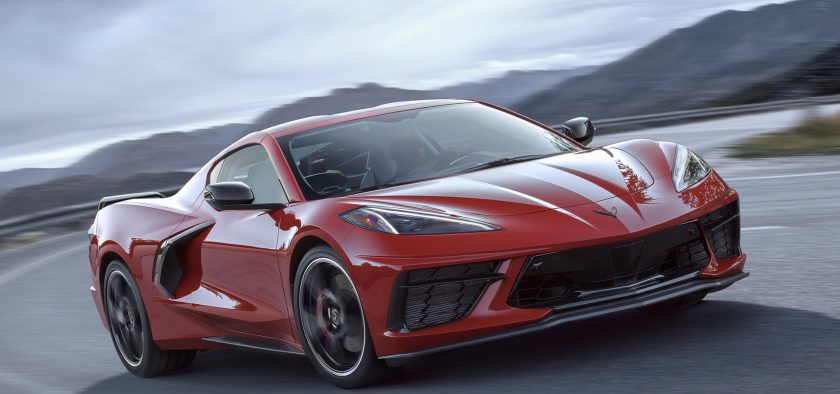
The Next-Generation Corvette Is Radically Different. Here’s What Led GM President Mark Reuss to Revamp an Icon.

When it came time for Corvette Chief Engineer Tadge Juechter to convince General Motors execs that the eighth generation of the iconic sports car needed a mid-engine configuration, he had his work cut out for him. After all, since the first Vette rolled off the line back in 1953, the engine has been up front. One bigwig, however, didn’t need to be swayed. “Several leaders needed a lot of hand-holding and were non-believers,” Juechter tells Entrepreneur, “but I never had to convince Mark Reuss. He knew it was the right thing to do.”

Right from the get-go, GM’s president believed this radical change was necessary for the C8, as the next generation is known. Placing the engine behind the driver and in front of the rear axle — which improves acceleration, braking and handling — is an engineering feat normally reserved for wildly expensive supercars from the likes of Ferrari, Lamborghini and McLaren. A mid-engine Corvette sends the message that America’s sub-six-figure sports car (the starting price will be under $60,000) is ready to stand wheel-to-wheel with the world’s best. Based on the overwhelmingly positive response at its unveiling in Tustin, Calif., on Thursday evening, Reuss, Juechter and the rest of the team were on to something.

As both a lifelong Corvette fan and longtime GM employee — he began his career there as a student intern in 1983 — Reuss is uniquely positioned to oversee the development of a vehicle many view as revolutionary. We spoke to him on the eve of the car’s reveal to learn how he found the confidence to remake a legend, his message to doubters and why moving the engine to the middle doesn’t make the C8 any less of a Corvette.

Image Credit: General Motors

This is the first mid-engine Corvette in the vehicle’s over 65-year history. How apprehensive were you about making such a huge change to an American icon?

You’re always a bit nervous to mess with success, especially with a legendary vehicle like the Corvette. However, the current generation, the C7, had pushed the limits of what could be done with that configuration — it is the absolute best. To take performance to the next level for our customers, we had to move to mid-engine.

What gave you and your team the confidence to make this change?

First was the confidence in our Engineering, Racing and Design team. This group lives and breathes Corvette, and they are students of performance. When they said they were ready, I knew it was time. Second, mid-engine has always been part of Corvette’s destiny. We have explored mid-engine concepts dating back to the original CERV I from 1960. Corvette’s original chief engineer, Zora Arkus-Duntov, famously advocated for mid-engine vehicles, but we needed to make sure we kept Corvette true to its roots of attainable performance. Mid-engine has historically posed a challenge to this mission; not so anymore. The time has come, today, and we feel both Corvette traditionalists and potential new customers will embrace the change in layout.

There must have been — and continue to be — plenty of naysayers, both internally and externally, who don’t think a Corvette should be mid-engined. How did you maintain your vision, and how do you respond to them?

Internally, I remind them that we don’t set the standard for Corvette; our customers do. Our job is to exceed those standards and remain faithful to the brand promise. This car does all of that and more. It will quiet the naysayers on both sides of the wall quickly once they see it and, especially, once they drive it.

Tell us about your personal history with the Corvette.

Simply put, this car is the reason I work at General Motors. In the mid-’60s, I spent many car trips hunched in the back of a Corvette riding with my dad. On Saturdays he would take me to work at the Chevrolet engineering building, and I made him promise to take me to the research labs to see the new Corvette. Everything this car stands for — its presence, performance and heritage — raises the hair on the back of my neck. Most importantly, Corvette has always embodied the company’s resilient spirit by demonstrating what it means to win and be the best.

How would you describe the essence of a Corvette, and what steps did you make to maintain that spirit in the new generation?

No matter the configuration, Corvette has to live up to its fundamentals: performance, functionality and attainability. No other car delivers on all of those points like Corvette does. Whether you’re on your daily commute, hitting the track or taking a long weekend trip, the Corvette can do it all, and then some. That’s what we need to build on. Corvette has always taken design cues from fighter jets, and this one is no different. From the forward cabin to the driver focused interior, it truly feels like a proper cockpit. These are some of the key attributes that we wanted to build on. 

What are the biggest changes in the C8?

The mid-engine layout is the biggest change. This new layout enables better weight distribution, power to the ground and acceleration. This will be the fastest Corvette ever, capable of zero to 60 in less than three seconds — and we didn’t compromise a thing to get there. This new layout and its many performance attributes will deliver an elevated supercar experience. Our current C7 and those before it had a powerful presence, but this new mid-engine eclipses anything we have done in the past. Our design and engineering teams did an excellent job, working together to create a mid-engine vehicle that still looks like a Corvette, while providing even more performance and functionality. On the interior, nearly all the parts are hand-wrapped and stitched, and all the decorative trim and attention to detail reflects the premium craftsmanship that was our mandate from the beginning of development.  

You mentioned the design was inspired by fighter jets. Corvettes were popular with astronauts in the ’60s — would you say Chevy is connecting the vehicle back to its roots?

Every Corvette has been inspired by the aircraft of the era, and this new Corvette continues that tradition. Chevrolet’s design team looked at jet fighters as inspiration — the epitome of design and performance. Advancements in precision engineering, design and technology have combined to push the boundaries of propulsion and aerodynamics. These are traits that Corvette has always embodied. NASA and aviation have always inspired the designers and engineers that created every generation of Corvette.

Image Credit: General Motors

With so many competitors in the sports car space, how do you maintain an edge? How did you encourage your team to think differently when bringing this car to life?

If we remain true to Corvette’s brand mission and deliver innovation and performance at an attainable price, we will maintain our advantage. I pushed the team to find new technologies, materials and solutions that improve the entire experience for the customer. Having a racing team really provides an advantage, too. We learn a lot on the track that then transfers over to the street.

You’ve climbed the ranks at GM. Have you learned more from your successes or your failures?

Life is a series of successes and failures, hopefully more of the former than the latter, but if you’re doing it right, you learn a lot from both. That’s what I’ve tried to do, and that’s what we’ve tried to teach our children to do. The same theory applies whether you’re going to school, starting a new job or launching a new vehicle. Always be learning.

What do see for the future of Corvette? Can you envision an electric model? An autonomous version?

We’ve just started the journey on C8; it’s going to be a long and exciting trip. Stay tuned!

How the Crisis is Changing Our Love of Driving, and How Entrepreneurs Can Act On It

Earlier this year, the ongoing health crisis altered the driving behavior of Americans by decreasing how often we drive. However, this shift is really just the continuation of a trend. America’s love affair with cars was heading toward a break-up — or a temporary break at the very least. 

Cracks began to appear in this relationship even before a 2016 Zipcar survey of millennials that showed a preference for ride-share services over the debt and overall costs of owning a vehicle. 

Fast-forward to 2020, where the majority of vehicles have been sitting in driveways for weeks and months at a time. When drivers look at their cars, now being used far less but yet still costing money, it may be that many are reconsidering how much they want to spend on future vehicle purchases. 

In fact, numerous signs point to the conclusion that our country’s relationship with vehicles may never be the same again. 

Rising used purchases

According to June 2020 statistics from auto warranty provider Olive, people are buying more used cars (as opposed to new ones) and are increasingly doing so online. As Olive noted in its research, a used car that is only a few years old can save a purchaser between 30 and 50 percent compared to the cost of a new car.  

The shift in buying preferences to used car purchases includes those who used to ride the subway train, or bus systems, according to a May 2020 Ipsos poll. That highlights lingering concerns over the health and safety of public transport. Nearly half of the survey’s respondents predicted that they would be driving more once (or if) they return to work at their company’s physical offices. 

Changing work environments and lifestyles 

How we now work and live might drive the evolution of our perspective on personal vehicles. For example, millions of people may permanently transition to remote work. Twitter, Square, Google and other big companies are now letting most or all employees work remotely, either permanently, or for the next several months at least. 

The added convenience of delivery, errand and ride-share services has changed our perspective too. These services can accomplish a lot of the tasks we previously used vehicles to perform daily. 

New vehicle rental models may also reduce reliance on car ownership. For example, the automotive subscription-based startup Fair provides used cars for as long as the user needs one. All a consumer has to do is make an upfront payment and pay a monthly subscription fee. 

Unlike a vehicle lease, the Fair user can then terminate the subscription at any time, which can help workers who still need to drive into a physical location but don’t want to risk the health and safety concerns many now associate with public transit.

Time for industry change and innovation

This shift in the relationship between American consumers and their vehicles is an opportunity for entrepreneurs to develop solutions with these trends in mind. Simultaneously, those new solutions can put some healthy pressure on the auto industry to change its model and innovate processes for vehicle development, manufacturing and service delivery. 

When it comes to vehicle purchases and trade-ins online, one of the biggest challenges has been carrying that online experience all the way through to delivery. Moreover, traditional automakers may be afraid to give up the showroom model, which is all they have ever known. 

Carvana, Vroom, CarMax, and Tesla show vehicle manufacturers what the online vehicle trade-in and purchase with delivery can look like. They have proved that this approach is possible thanks to digital sales tools and the personalization of a customer’s digital experience. Some brands are starting to catch on, including GM’s “Shop.Click.Drive.” program for home or office vehicle delivery. Ford also offers vehicle delivery through many of its dealerships.  

Many in the auto industry are also finding solutions for current health and safety concerns. A paperless, digital approach to purchase forms may become the norm, along with no-contact or touchless delivery with delivery alerts through an app. In return, it seems as though more consumers are becoming comfortable with the idea of online vehicle purchases. 

Startups and big automakers mix in new ways

With challenges and the need for change, there is considerable potential for entrepreneurs and startups to disrupt the auto industry. 

From startups that are guiding the development of autonomous vehicles and components to augmented reality that projects maps onto the windshield, there are opportunities to ensure vehicles remain an integral part of American life. This automotive innovation also includes introducing changes to vehicles that can help reduce accidents and road deaths as well as adding features like in-vehicle payments to facilitate on-demand orders and curbside pickups.  

With large automakers facing ongoing challenges, entrepreneurs might also have opportunities to collaborate and provide the innovation necessary to keep vehicles relevant for current and future generations. Even as of 2018, Crunchbase statistics show that vehicle makers had already been partnering and acquiring startups that pushed their vehicle products and processes forward. 

These acquisitions include BMW’s purchase of ParkMobile for its mobile parking payments platform and Daimler’s purchase of ride-sharing app Flinc. Additionally, Ford has purchased companies that help with vehicle connectivity and data transmission, while the PSA Group acquired a used-car sales platform and Volvo added an online car marketplace. 

A relationship in flux

Whether used or new, with a human driver or an autonomous one, driving will continue to be with us for the foreseeable future. And like any relationship, our relationship with vehicles will change over time. It’s up to automakers and startups to add excitement and relevancy back into the relationship if they want to keep us engaged. 

California Will Only Allow Zero-Emission Vehicle Sales By 2035

California Gov. Gavin Newsom this week announced a statewide ban on new gas and diesel vehicle sales by 2035. The executive order, issued on Wednesday, aims to accelerate The Golden State’s efforts to combat climate change and reduce its reliance on fossil fuels.

Known for its car culture (and, subsequently, traffic congestion and air pollution), California is the first to implement such sanctions in the United States. More than 30 countries and cities across the globe have proposed banning the sale of fossil fuel-powered vehicles in hopes of reducing health risks, meeting greenhouse gas targets and increasing energy independence.

“This is the most impactful step our state can take to fight climate change,” Newsom said in a statement. “For too many decades, we have allowed cars to pollute the air that our children and families breathe. Californians shouldn’t have to worry if our cars are giving our kids asthma. Our cars shouldn’t make wildfires worse — and create more days filled with smoky air. Cars shouldn’t melt glaciers or raise sea levels threatening our cherished beaches and coastlines.”

In 15 years, 100 percent of in-state sales of new passenger cars and trucks will be zero emission — i.e. battery- or hydrogen-powered. The sweeping plan also mandates that drayage trucks and off-road vehicles and equipment go emissions-free by 2035; medium- and heavy-duty vehicles, meanwhile, must ditch internal combustion engines by 2045. The rules apply only to new gasoline- or diesel-powered vehicles sold in the state after the ban goes into effect. Cars and trucks registered before 2035 will remain street legal.

Design a site like this with WordPress.com
Get started